The Canyon County Most Wanted List
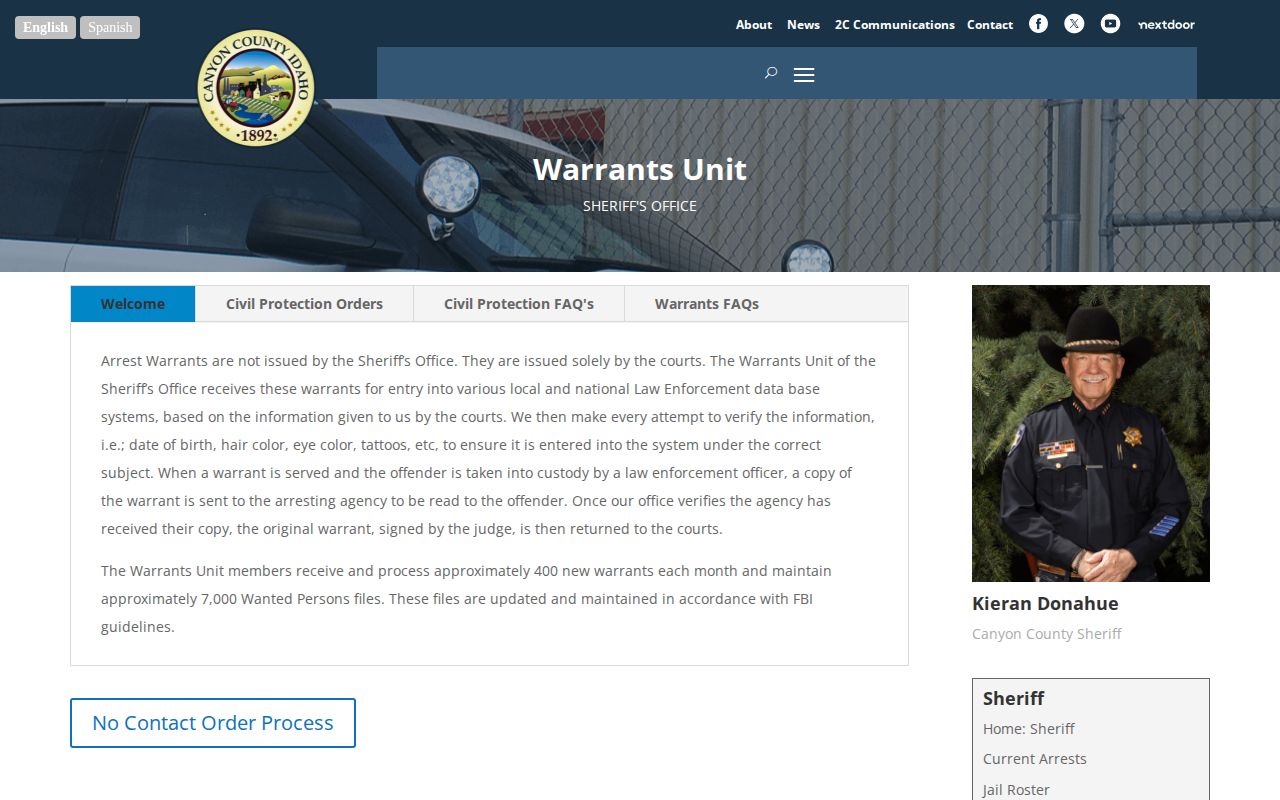
Canyon County has no sheriff-run Most Wanted page. The Canyon County Warrants Unit handles warrants instead. Courts issue them. The unit then enters each one, verifies it, and returns it to the court. So a search result that looks like an official most wanted roster for the county deserves caution. An old mirror page is not a live list.
The unit's published numbers describe workload, nothing more. About 400 new warrants arrive each month. Roughly 7,000 Wanted Persons files sit in the system. Those figures are not a headcount of people on the run, and they say nothing about recent jail bookings. A warrant's status shifts too, as it gets served, recalled, quashed, or tied to a later court event.
Someone picked up on a warrant may appear at Canyon County Jail in the recent custody feed. Remember that the two tools answer different questions. A wanted notice and a jail card are not interchangeable, and the jail feed was never meant to be a full warrant list.
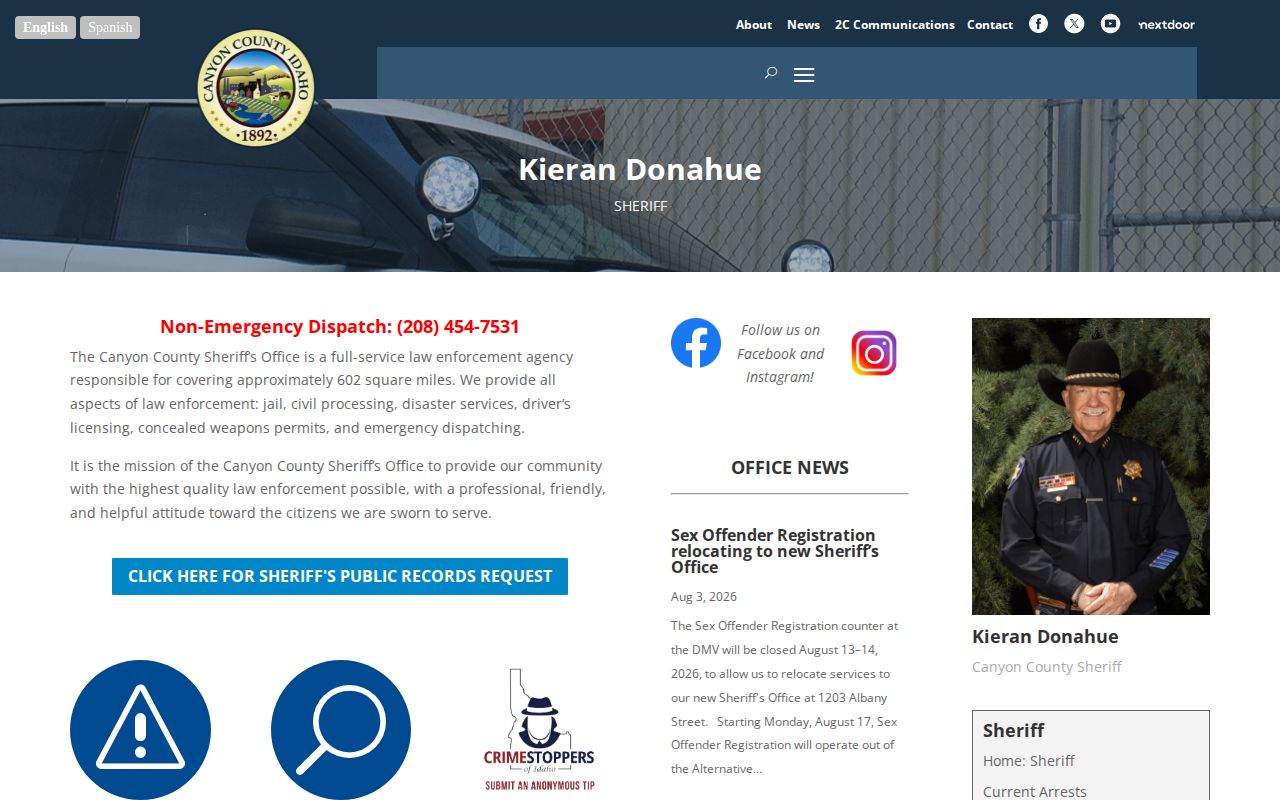
For agency links and questions about how warrants get routed, start with the Canyon County Sheriff's official page. It is the county's own source for that information.
What Canyon Wanted Listings Show
Treat every field in a public wanted listing as a lead to verify. It is not a settled fact. Two different sources often get lumped together. The regional Crime Stoppers page may show mixed agency records with photos and descriptors. A county warrant file, on the other hand, tracks what the court actually issued. They serve different purposes. Keep them separate in your mind.
| Listing detail | Meaning and limit |
|---|---|
| Name | The name used by the agency or Crime Stoppers entry. Confirm identity through official records. |
| Photo | A photo may appear on a regional entry. It stays on the source page and is not rehosted here. |
| Agency | The agency connected to the notice. Crime Stoppers can mix jurisdictions. |
| Descriptors | Physical or case details supplied by the source. They can be incomplete or change. |
| Wanted date | A source date that does not by itself establish current warrant status. |
| Tip route | 911 for immediate danger, the agency for non-emergency information, or an anonymous Crime Stoppers route. |
A wanted listing can involve someone who has never been booked on that warrant. A jail card works the other way. It covers a person who was, or is, in county custody within the recent feed's scope. Those are two distinct situations, and a photo or label alone does not tell you which one you are looking at. The court record is what settles it.
Use the Canyon Wanted List Safely
Using a wanted notice safely means reading the source, keeping the agency contact handy, and passing along what you know. Never act on it yourself. The page is not a reason to follow anyone, confront anyone, photograph anyone, or detain anyone. If danger is immediate, call 911. Everything else can wait for the professionals.
- Open the official county warrant material or the regional Crime Stoppers wanted page.
- Read the agency, date, descriptors, and tip instructions instead of relying on a face or name alone.
- If you recognize a person, keep distance and send the information to law enforcement or the anonymous tip channel.
- For a person affected by a possible warrant, contact the court or an attorney and ask about lawful next steps.
- Use the county's recent-arrest and court routes only to verify custody or case history, not to make a private arrest.
Do not approach. A wanted notice is a public-safety alert, full stop. It grants no permission to pursue or arrest anyone.
Spot your own name on a list? Skip the third-party summaries. Go straight to the county's Warrants Unit or Idaho iCourt, since the court record and the identifiers you supply control the answer. After that, the Canyon County booking hub can show whether a later custody entry exists in the county.
Canyon County Tips and Rewards
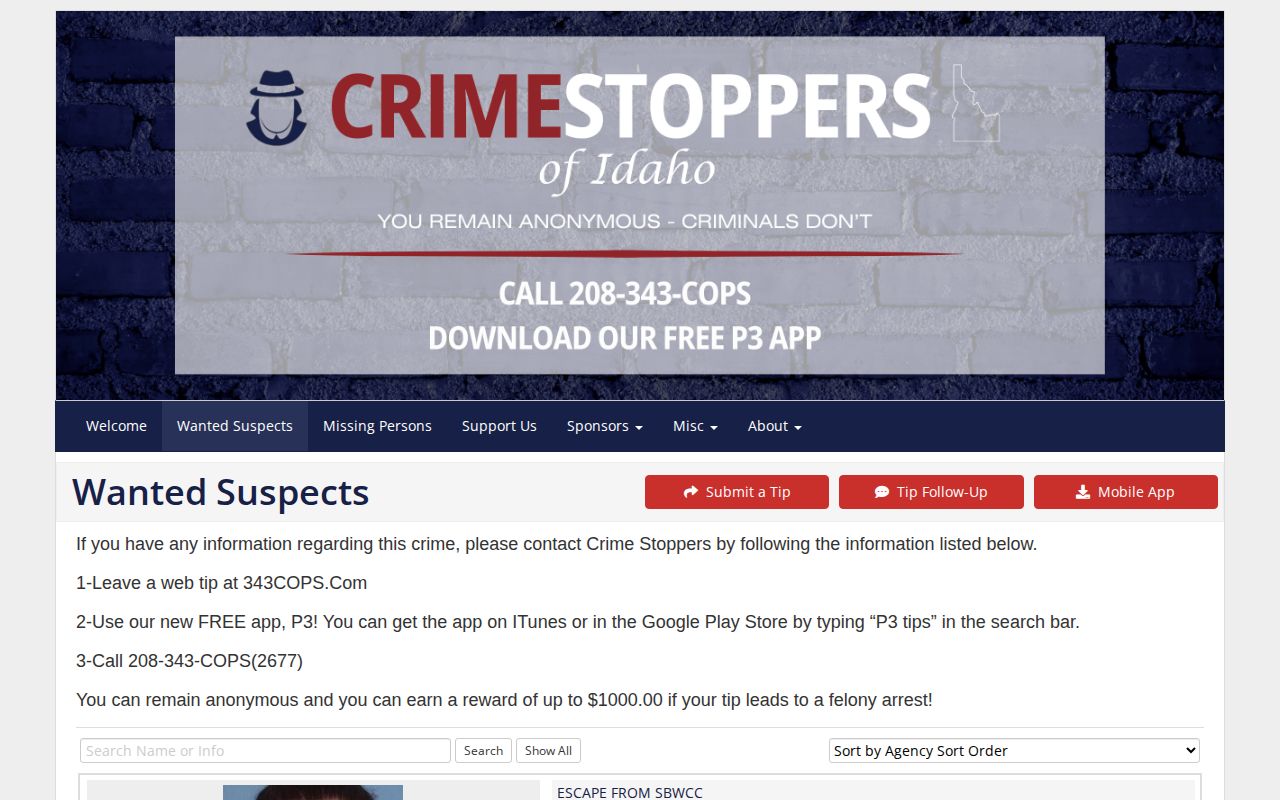
Crime Stoppers of Idaho's Wanted Suspects page covers the whole state, not just Canyon County. Think of it as a regional fallback rather than a sheriff's list. The page is dynamic and changes often. You can sort entries by agency, last name, recent date, or wanted date. A record may carry a photo, descriptors, and tip details.
Tips stay anonymous. Use 208-343-COPS, the website, or the P3 app. A reward of up to $1,000 may apply when a tip leads to a felony arrest. Coverage, listing counts, and reward rules shift over time. Check the page for current instructions before sending anything in.
Immediate danger
911
Give the location and safety facts to emergency dispatch. Do not approach the person.
Anonymous regional tip
208-343-COPS
Follow Crime Stoppers' current website or P3 instructions when you want to submit information anonymously or learn the reward rules in effect.
A tip is not a judgment. It should convey what was observed and where, without adding a conclusion about guilt. The agency or court decides what the information means.
Check a Canyon County Warrant
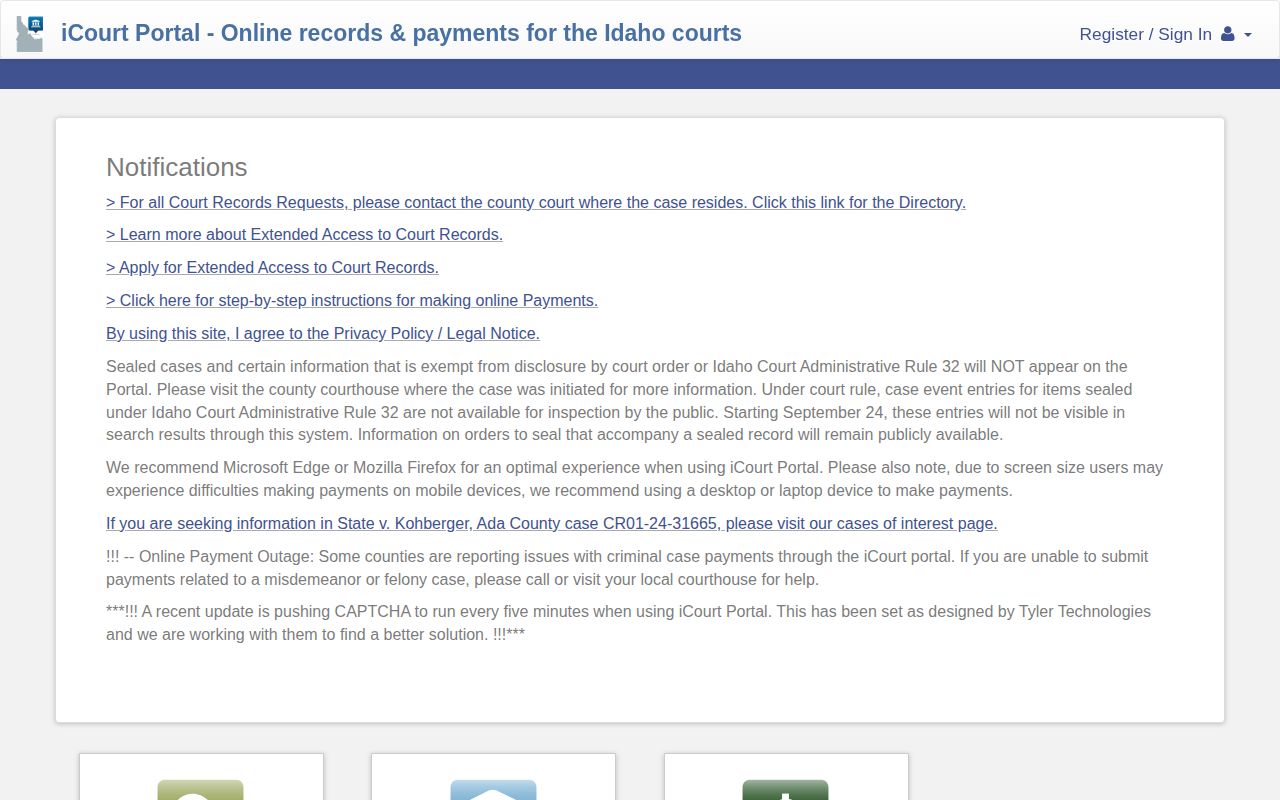
Checking on yourself? The county points you to Idaho iCourt. Enter a first name, last name, and date of birth, pick the case with registers of action, and read the history for a warrant entry. A name match alone proves little. Compare the county, case number, date of birth, and hearing history before drawing any conclusion.
For a check on someone else, the Warrants Unit page lists `(208) 454-7273` and asks for a name plus date of birth. The unit enters and verifies warrants in local and national systems, which is why it can clarify what a public court screen cannot. When a result seems unclear, the unit or the court is the right place to ask.
The Canyon County Warrants Unit source supplies the local check path and phone line.
- Use iCourt for your own name, date of birth, case, and register of action.
- Read the full case history instead of relying on a summary line.
- Call the Warrants Unit for the official route when checking another person and provide the requested identifiers.
- If a warrant may affect you, ask the court or an attorney about surrender and hearing procedure.
Canyon Warrant Types and Court Records
A warrant is a court order directing law enforcement to act. Bench warrants often follow a missed court obligation. Arrest warrants come after a court finds the legal standard for arrest has been met. The label and its exact effect depend on the case and the court record behind it.
| Record question | Best source |
|---|---|
| Is there a case history? | Idaho iCourt, using name and identifying details. |
| Was a warrant entered? | Register of actions, the Warrants Unit, or the issuing court. |
| Was the person booked? | Current Arrests and Jail Roster, which cover different custody scopes. |
| What happened after arrest? | Canyon County Court Calendar and iCourt disposition records. |
A warrant has its own life cycle. It can sit active for weeks. A judge may recall it. Or it ends in an arrest. The county's recent custody feed shows who has been booked, but that is a different thing entirely. Someone with an active warrant may not be in jail yet, and someone behind bars may have had a warrant served long before the listing appeared.
A prison sentence moves the trail to a state system. The Idaho Department of Correction Resident/Client Search tracks people in state custody. That tool is separate from the Canyon County Jail roster. It will not show booking photographs from county arrests.
Canyon County Wanted Court Follow-Up
Canyon County's court calendar lists the details that matter to anyone tracking a case. You can find the hearing time, courtroom, case number, hearing type, judge, and case type. The Warrants Unit notes that adult in-custody arraignments generally happen around 1:30 p.m. Weekends and holidays shift that schedule.
Schedules aside, the docket is where a case takes shape. Charges get amended, dismissed, or resolved by plea as things move forward. A wanted notice captures one moment. A later booking card captures another. For the full story, read the official court record itself.
After a warrant or booking question comes up, the Idaho iCourt portal is the official route for the full case history.
Why No Sheriff Most Wanted Roster
Canyon County does not publish a sheriff-run Most Wanted roster. Its official warrant materials center on a warrant-check process. There is no photo gallery. Because no maintained list exists, there is no public count of wanted individuals, no update schedule, and no stated photo policy to describe. Crime Stoppers fills part of the gap with regional wanted notices, though its coverage mixes several agencies and should be treated as a secondary source.
The gap does not mean the county has no warrants. It simply means the public doorway is the warrant-check process rather than a standing roster. Follow the agency's tip rules. Keep court verification separate from the recent jail feed.
The Crime Stoppers wanted suspects page is a regional secondary source.